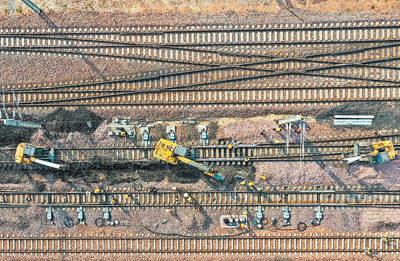
Now, with advancements in technology, joint plates have been replaced by welding techniques, creating seamless rail connections. Railway maintenance teams replace worn-out rails and switches during scheduled repairs and maintenance periods, gradually upgrading traditional 50kg/m rails to 60kg/m rails. These upgraded rails have significantly improved steel properties such as toughness and density, allowing them to withstand the impact of higher-speed or heavier trains. The newly replaced rails are welded with the original rails to form longer stretches of seamless track. After years of effort, most of the steel rails on the Beijing-Kowloon Railway have been successfully upgraded.
 附件:
附件: